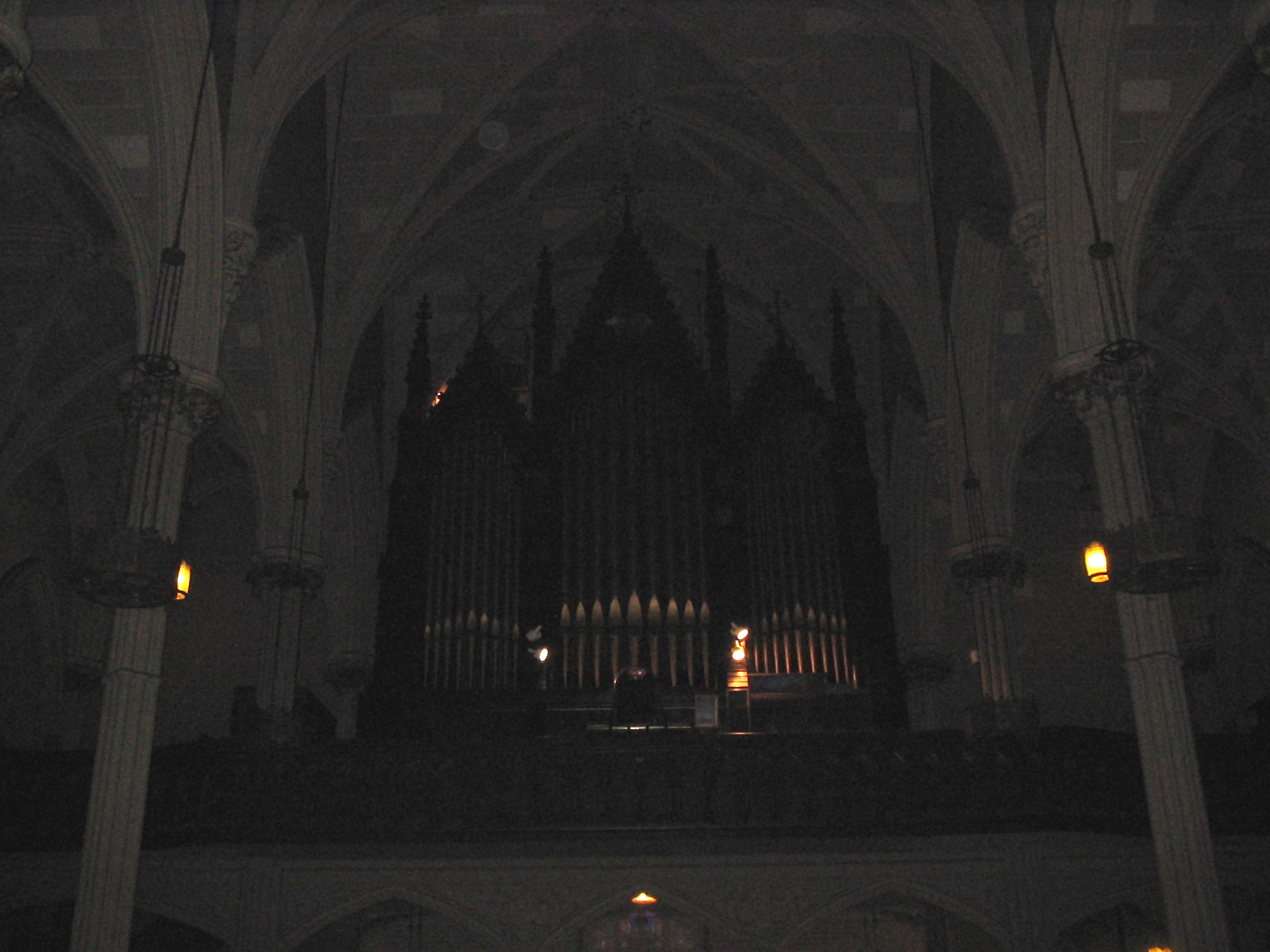
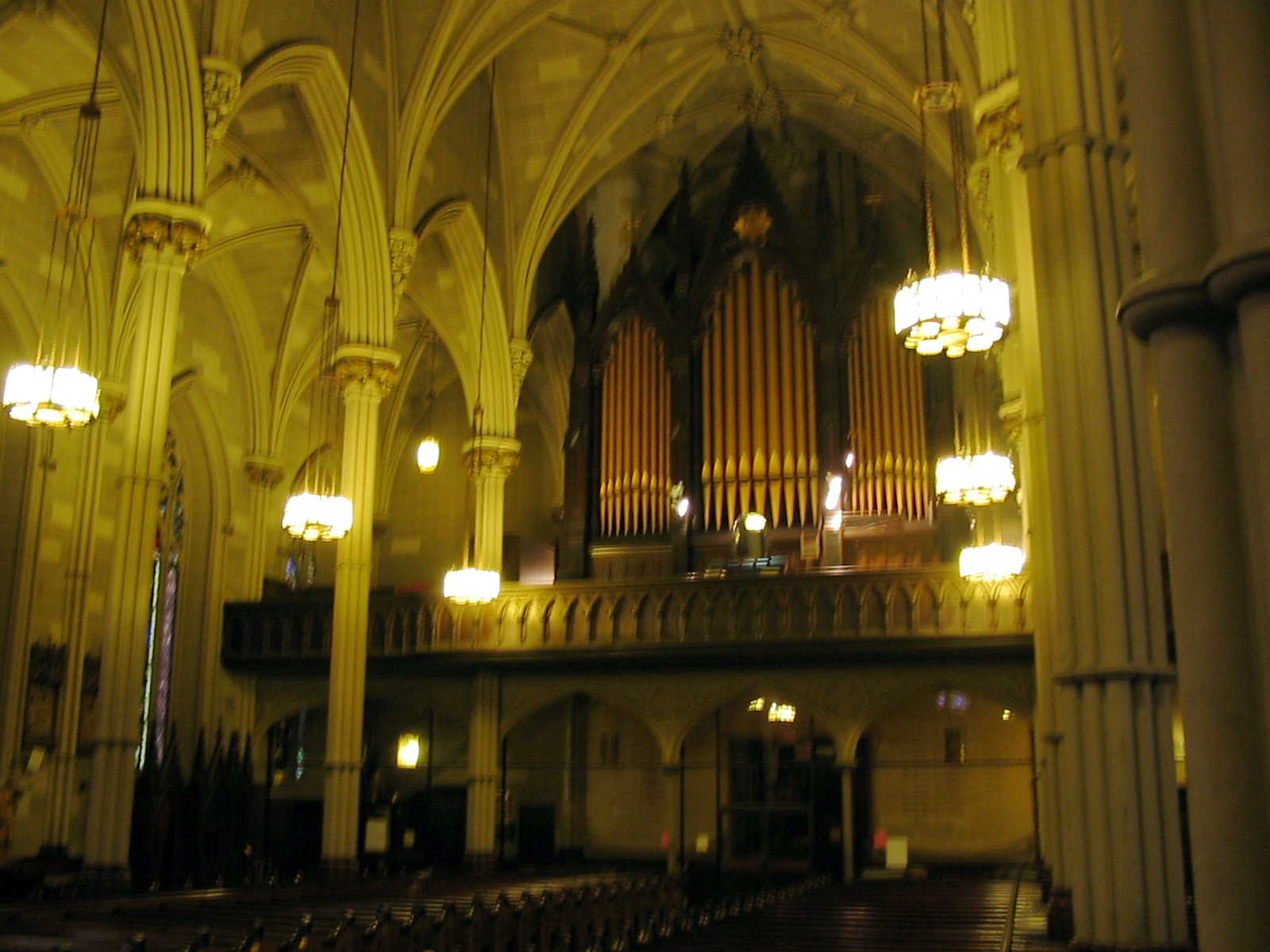
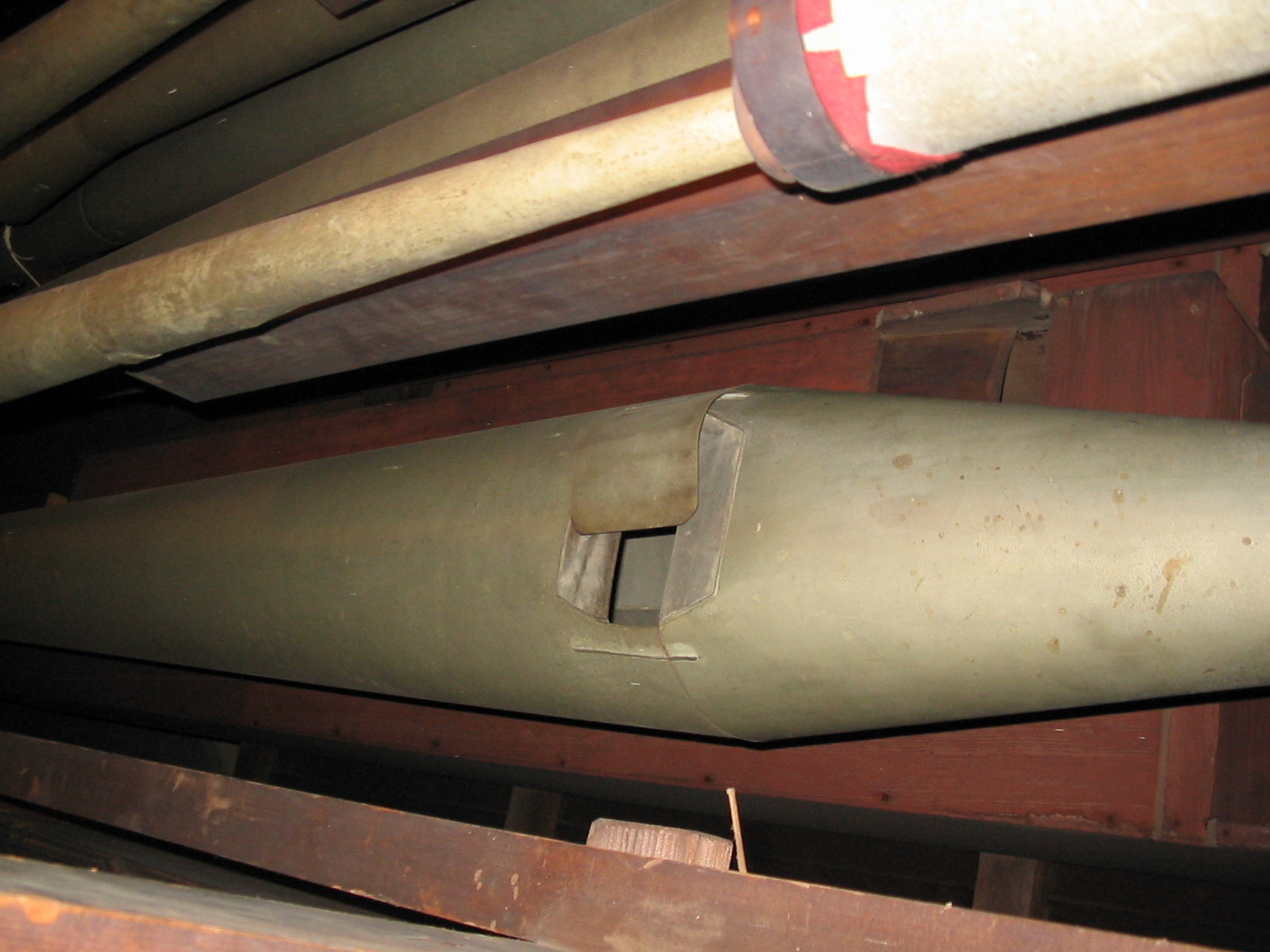
This magnificent pipe organ was constructed by Henry Erben in New York, NY between 1866-68. It is located in St. Patrick's Old Cathedral, a wonderfully reverberant Gothic space on Prince and Mott Streets in Nolita (North of Little Italy, New York), where I am Organist. The Cathedral, built in 1809, was partially destroyed by fire in 1866 (along with the 1852 Erben therein), and this organ was installed during the reconstruction. The organ recently received a Citation from the Organ Historical Society for its historical significance and musical merits.
I performed a recital on the instrument in March of 2002. Click here to hear the program. I also improvised some sketches for my Mocean project on it.
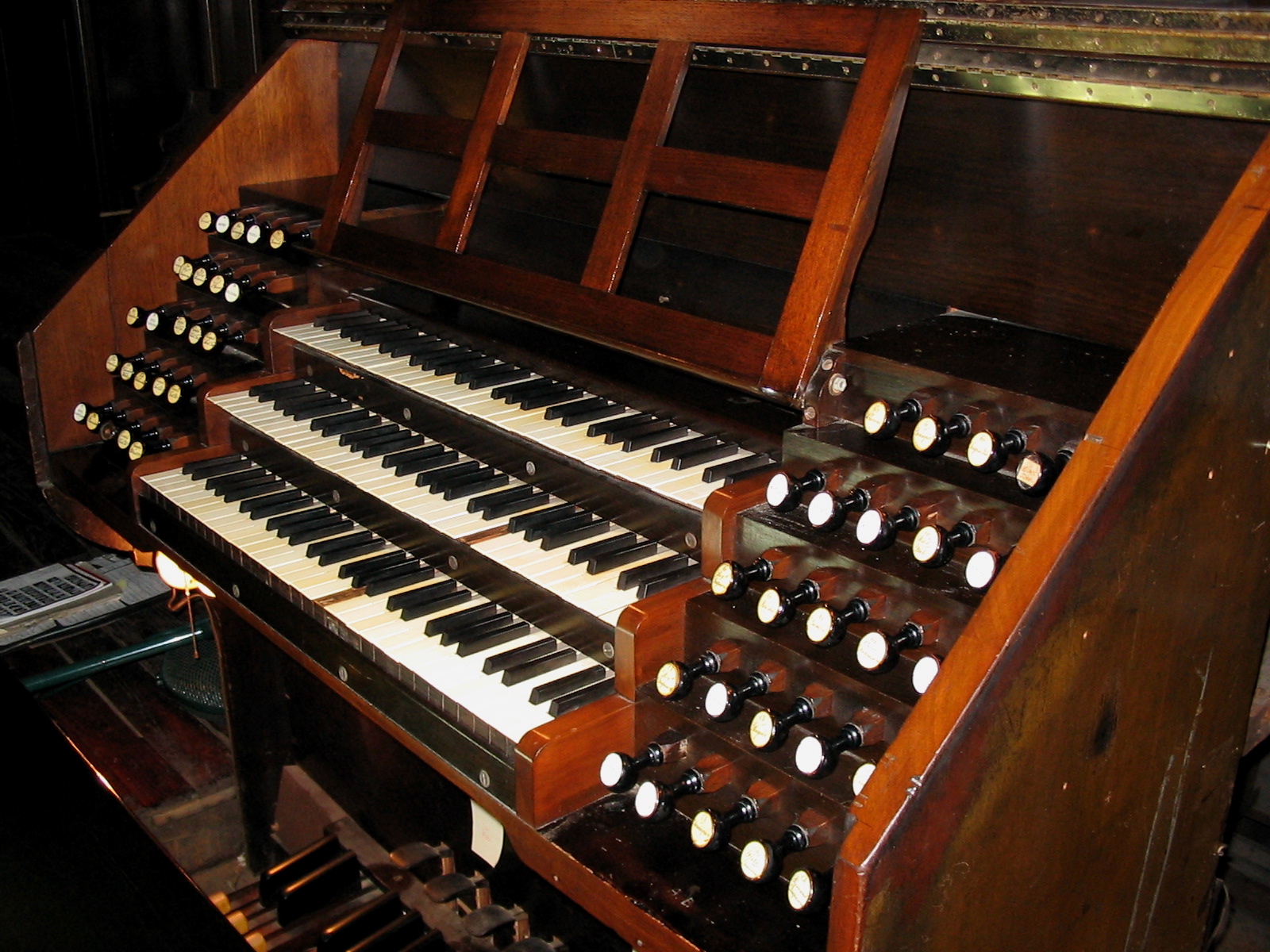
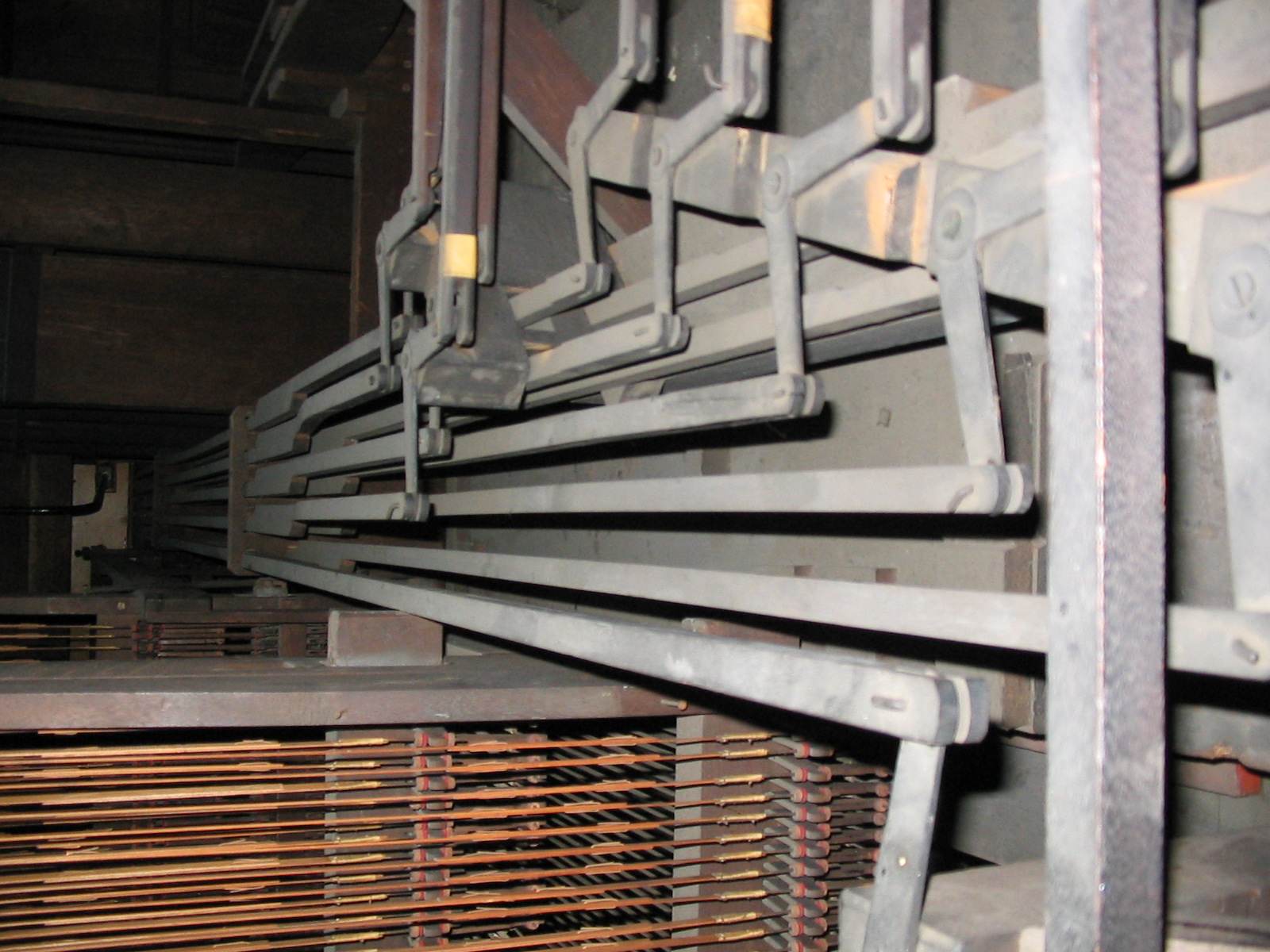
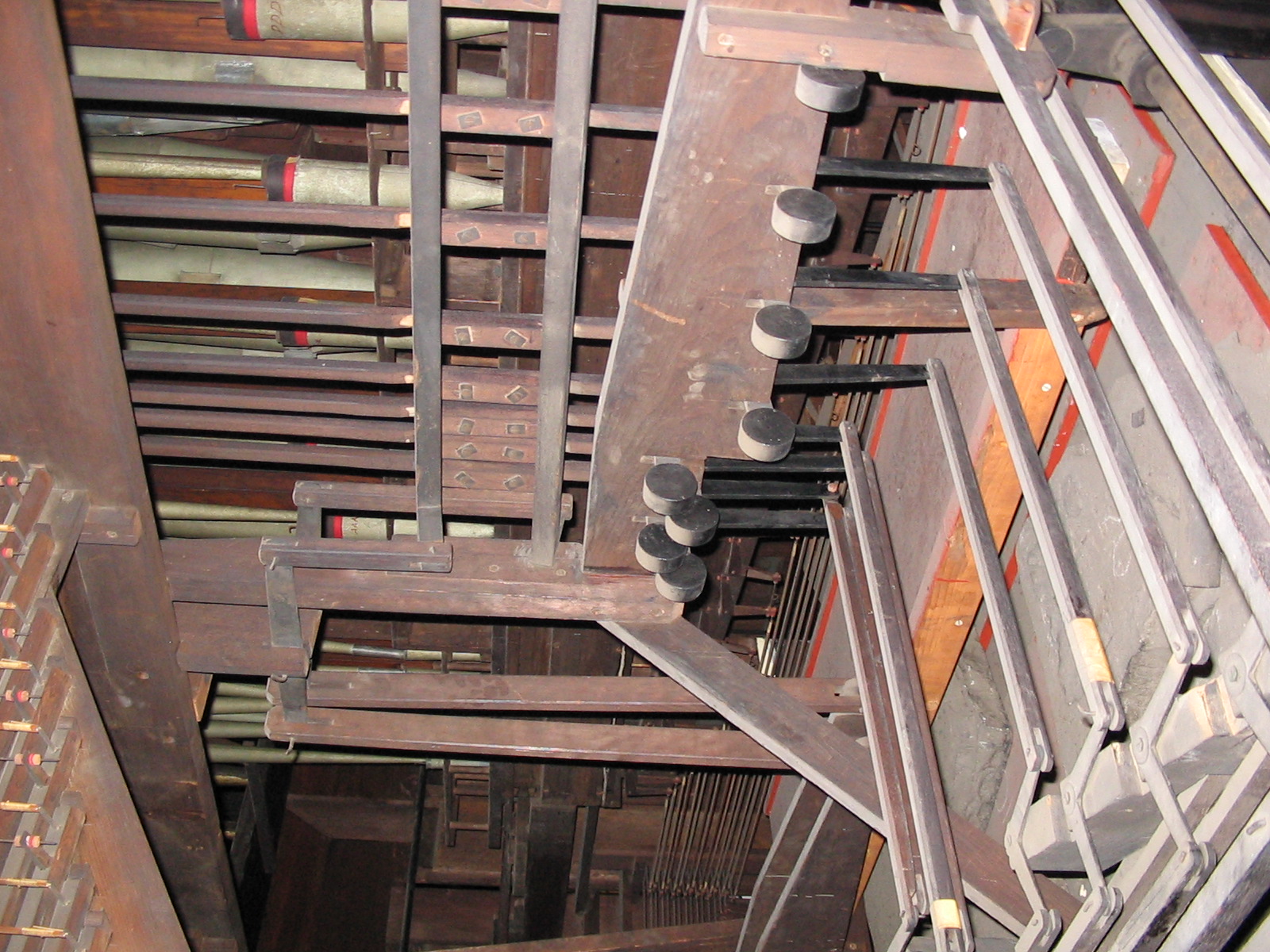
The instrument has three manuals (keyboards) and a pedal division, operated by tracker (mechanical) action. I play it every Sunday for services, and it has survived almost completely intact. Each pipe is signed and dated, and the organ is in remarkable shape, considering very little work has been done on it since it was installed.
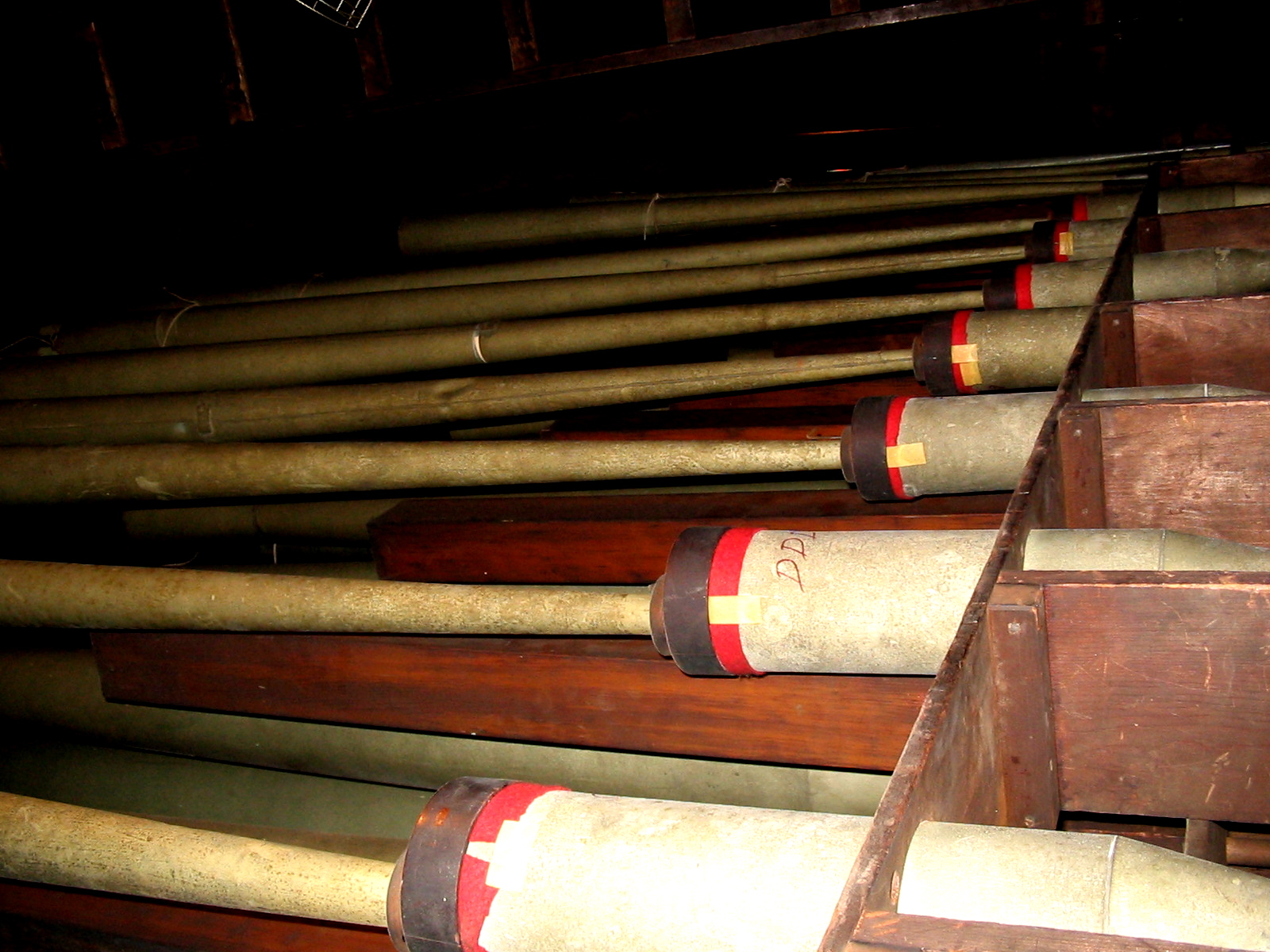
The organ has about 2,644 pipes. The black walnut casework is in Carpenter Gothic style, and the organ is located in the rear gallery. The console is attached and projecting, with overhanging manuals flanked by round-shanked stop-knobs arranged horizontally in terraced jambs. The list of stops can be found on the Web site of the NYC Chapter of the American Guild of Organists, here.
After the original installation, the second Mixture on the Great was removed in favor of a flute; Lucius Gutflelsh apparently signed and dated those pipes. The flute was replaced with a new mixture by OHS member Samuel Donelson, who worked on the instrument around 1969-1972. The new mixture is particularly bright. The reeds in the organ may have been voiced by John Stenkampf in the 1960’s or 1970’s, and the Great’s Gamba may have been replaced at some point. Otherwise, the organ retains its original voicing, and is tuned to approximately A=450. Some work of a shoddy nature was done on the console; the kickboard is especially bad. I can only guess as to when this damage was inflicted.
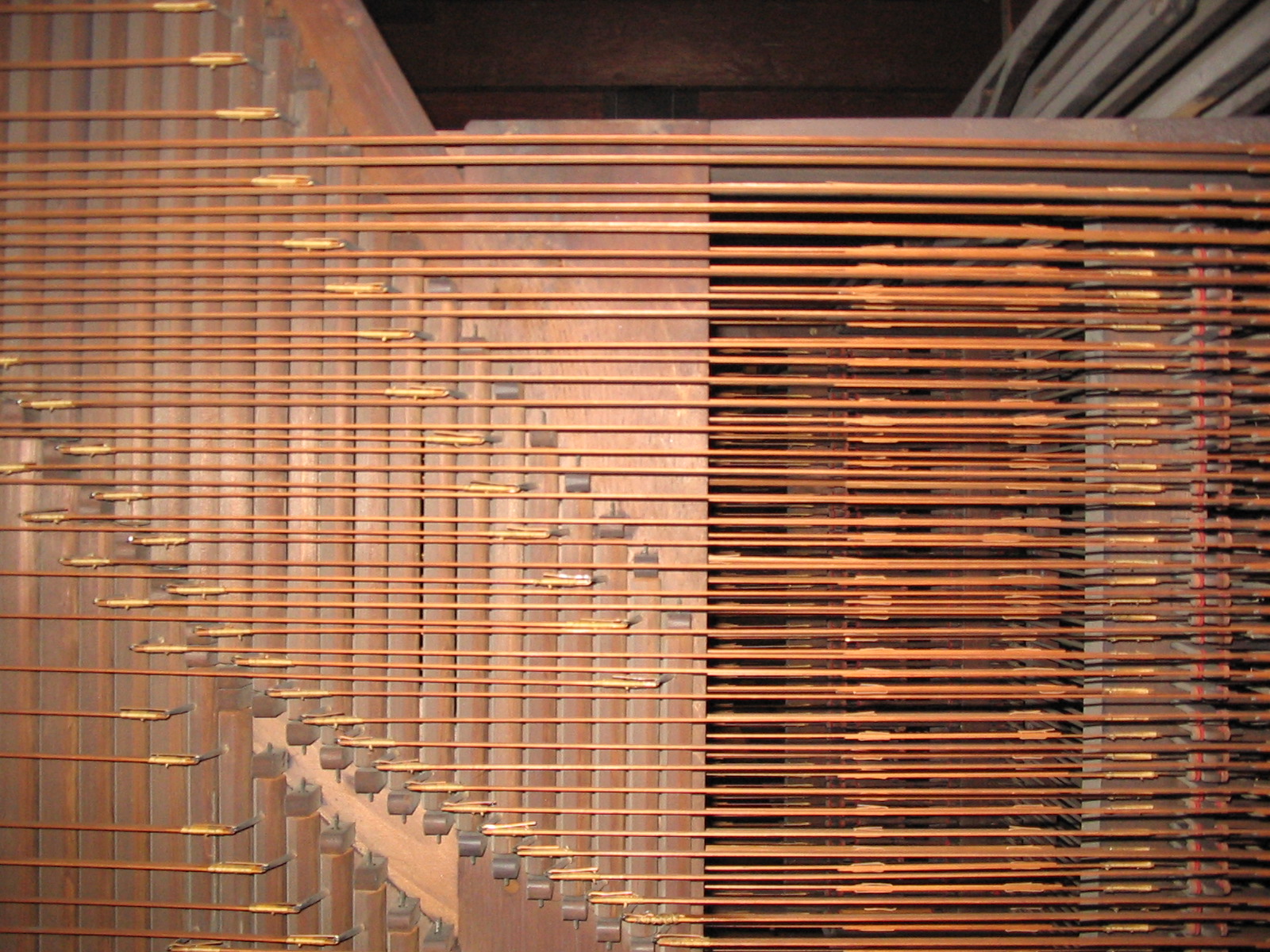
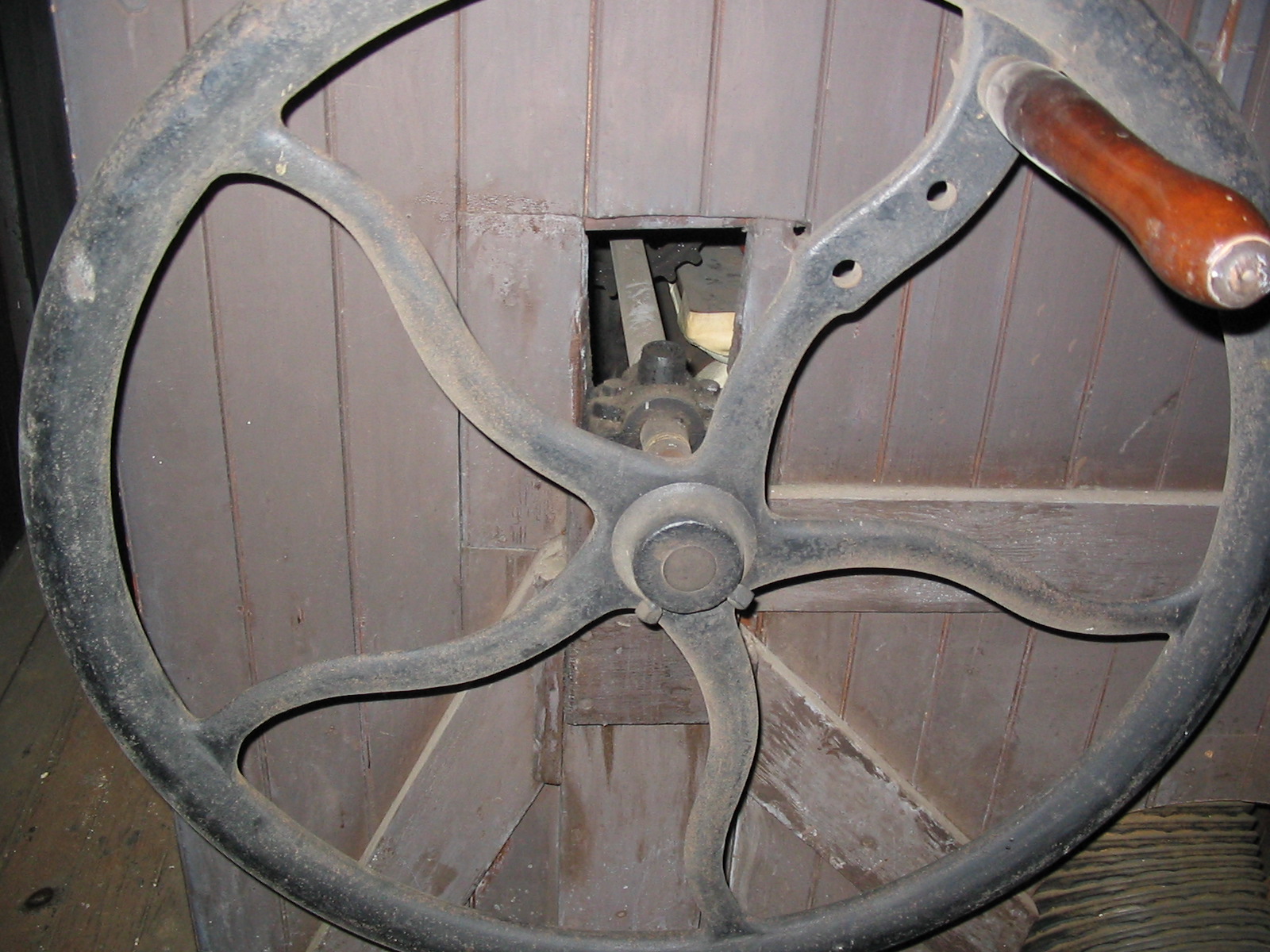
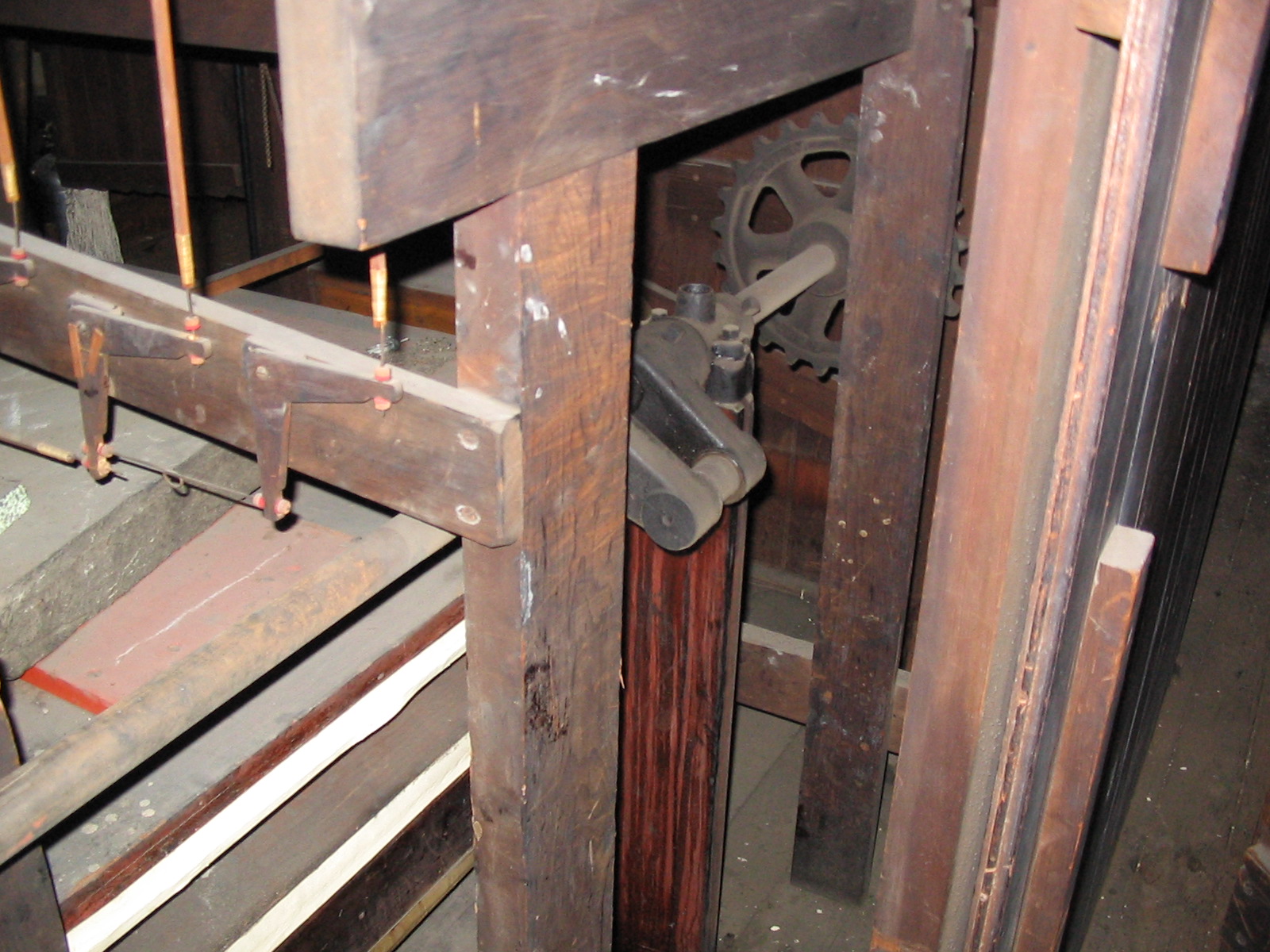
The present key action is out of adjustment; the combination action works, but not properly. The swell pedal mechanism, originally a binary hitch-down arrangement, was changed to a balanced system at some point: however, it is poorly designed and noisy. There are two wind reservoirs, one with three folds, one with a single fold; the single-fold reservoir was probably a three-fold reservoir. All three manual chests have double pallets in the bass octave, and the Great has three pallets for the lowest four notes. The original mechanical wind system is still in place, though not functioning. Some people have said the organ was pumped until about 1950, but an Odell service receipt would suggest otherwise.
Fortunately, little work was ever done on the instrument. Most of the work that was done on the organ was not up to Erben standards: a few of the original ivory stop labels were replaced with cheap plastic; ciphers were fixed with duct tape; and the materials and construction of the replacement mixture were not consistent with Erben’s extraordinarily high level of craftsmanship. Neglect has been this organ’s friend—not much has been done to it, and it is an exceptional survivor from that age.
Most other similar organs have either been destroyed or altered beyond recognition, especially in New York City, but also in the rest of the country. This organ is the only example of an original, three-manual Erben extant, and is a jewel of organbuilding in New York City. Though there is not much documentary evidence, what evidence I do have (courtesy of Stephen Pinel) suggests that it served a very important liturgical role for the rapidly expanding Catholic Church in New York and in the musical life of the City.
The organ is not in imminent danger at this time, though there was a Rodgers pedalboard stored in the choir loft, presumably bought to replace the flat pedal board. At the present time, I am just trying to keep it operational and perform triage when necessary. With Brett Milan of Milan Digital Audio in Illinois, I recently recorded each pipe of the organ for historical preservation purposes. Brett creates sample libraries for the Hauptwerk computer program and other software samplers. When he is finished editing the recordings, there will be a not only a sound picture of the organ in 2004, but also what it could sound like, if restored.
I have embarked on a process to obtain grant money for the maintenance, repair, and eventual restoration of the instrument. The Cathedral just celebrated its 195th anniversary, and is preparing for its 200th, at which time I would like to have the future of this organ secured. Sebastian Glück of Glück New York is the instrument’s Curator.